Do, Make, Stay, Listen
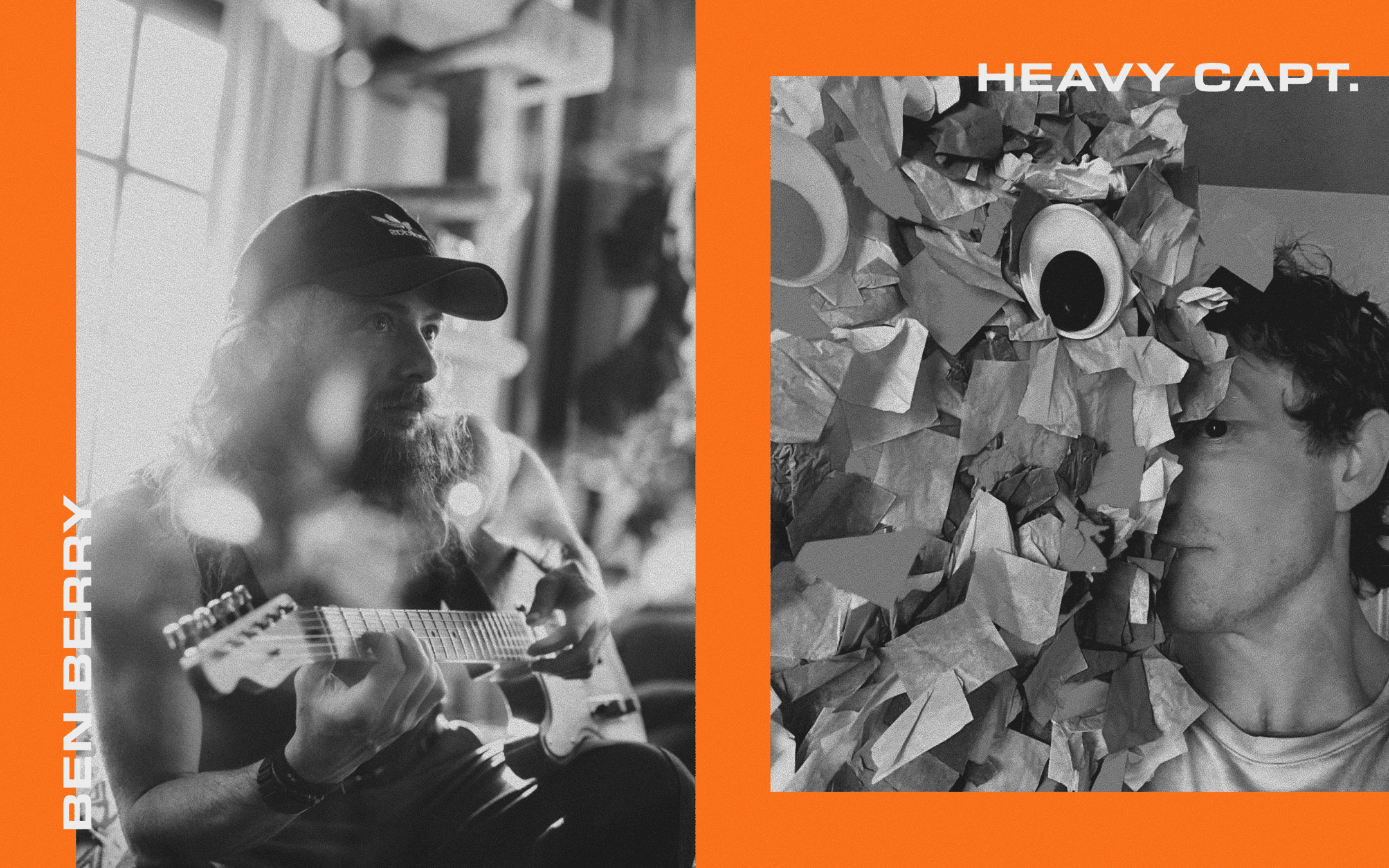
Ben and Dylan discuss soundscapes as comforting worlds, chords as tonal clouds, and finding common ground in collaboration while listening intently.
Ben Domanico-Huh
That was so nice. I didn’t want it to stop. It felt like the perfect end-of-week drift into the weekend. Sam said it had a Do Make Say Think or Sandro Perri kind of feeling. I was also getting some Arthur Russell in the rhythmic parts. And then just a general sense of… krautrock on a yacht.
Sam Ortiz
Not to be stereotypical, but it really feels like driving music. Windows down, sunset, just really balanced. I love the pacing. It’s extremely pleasant.
Ben Domanico-Huh
That makes me excited to hear more. I know you’re still working things out, but you sound great together. Can you tell us a bit about the process so far? When we first talked, you mentioned starting with guitar and expanding outward. What conversations or decisions have guided you to where you are now?
Dylan Deimler
We started with just guitar. Ben has such a distinct style, and I tend to work better when there’s some kind of world around me. So I started building small soundscapes for us to play inside. Last week was our first time experimenting with that, and it’s starting to come together.
Ben Domanico-Huh
What do you mean by Ben’s distinct style? I mostly know his more experimental and ambient work, not as much his guitar playing.
Dylan Deimler
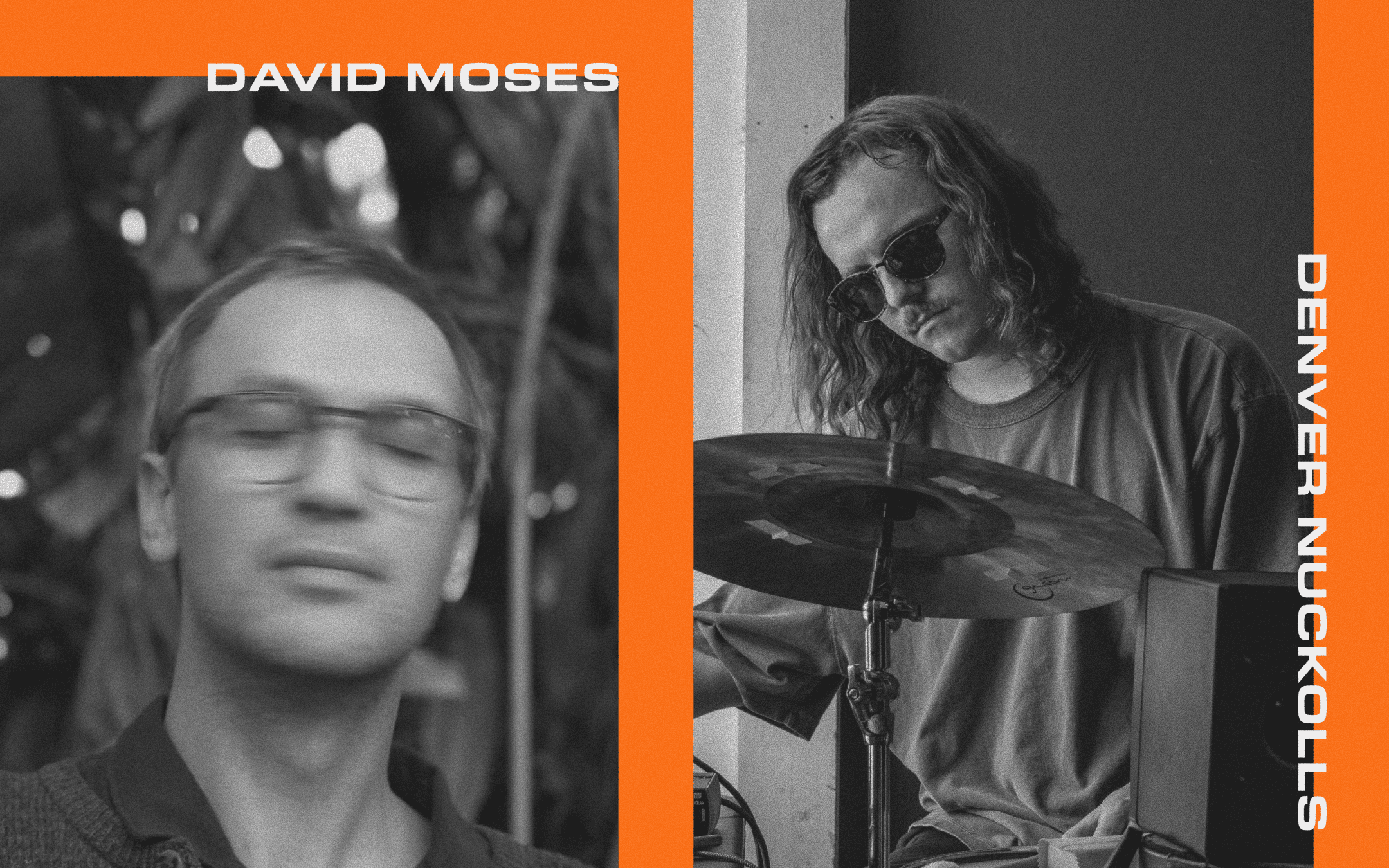
It’s in the chord tones. This whole experience has pushed me to think about guitar differently, less in terms of keys and more in terms of a few notes. His playing is very rhythmic, very distinctive.
Ben Berry
Guitar is kind of the best and worst instrument for me. With bass, I can fit into almost anything, but with guitar I tend to stay in a certain world. That’s partly a limitation. Outside of that world, it makes less sense to me.
That world is usually pretty explicit chordal movement, standard voicings. But I’m often trying to approach things more impressionistically. Instead of a straight root, third, fifth chord, I’ll add seconds, inversions, or other tones that open it up a bit.
We also talked about thinking less in terms of chord progressions and more in terms of tone clusters. Choosing a few notes that clearly sit in a key, like that was very much D major, but approaching it as a cluster rather than a progression.
And rhythmically, I like building repetitive clouds of rhythm that swell in and sometimes obscure the underlying pattern.
Ben Domanico-Huh
“Meditative” feels like the right word for what we just heard. And it’s a tricky balance to hold that patience in an improvised setting, where there’s always a pull to explore. Even before you started, you mentioned noodling, but what we heard didn’t feel like that. It felt very intentional.
Ben Berry
Dylan created a really nice environment with the soundscapes. It gives you something to color inside.
Sam Ortiz
It sounds like you’re very dialed into the theory side, which is great. You mentioned your background in jazz and ensemble playing. How much of that approach carries into what you’re doing now, especially in terms of listening and being intentional?
Ben Berry
It’s completely about listening. That was something I learned early on playing bass in jazz orchestras. A great director taught us to always listen to the whole band. When you’re younger, you’re focused on yourself, but the real lesson is to focus outward.
When I’m playing now, I try to listen as if I’m not the one performing. At the same time, I can anticipate something and bring it forward because I want to hear it. But I know it’s working when I forget I’m playing and just hear the whole thing as a listener. It should feel balanced and complete, not like separate parts.
Dylan Deimler
I don’t have that background. I’ve mostly played by myself, and it’s been a while since I’ve collaborated. But working at this kind of pace makes it easier to listen and react. Being in my own head for so long isn’t always great, so it’s refreshing to respond to someone else and not step on what they’re doing. It’s just a different experience from my usual process.
Ben Domanico-Huh
Your work as Heavy Captain is you performing everything, but it sounds like a full band. So you’re used to having those internal conversations, just with different versions of yourself.
Dylan Deimler
Exactly. Sometimes I’ll even assign myself roles, like pretending I’m a bass player for a moment, even though I’m not. But it’s still me responding to my own instincts. Collaborating is very different. And doing it in this slower, evolving space feels like training wheels in a way, but also just where our styles naturally align.
Ben Domanico-Huh
You described bringing soundscapes into the mix. That’s a broad term. How are you thinking about that here?
Dylan Deimler
There are a few VST sounds, but mostly I’m recording things around the house or outside and looping them. Leaves, twigs, that kind of thing. I like the idea of something non-musical being trapped in a digital loop. It adds something, and it’s comforting to have those natural elements in there.
Ben Domanico-Huh
I like that those sounds reflect your immediate environment.
Dylan Deimler
Yeah. I live near a quarry, and there are these huge machines constantly beeping. I really want to record that and make a piece out of it. It’s so constant that I don’t even notice it most of the time, but it’s always there.
Sam Ortiz
That’s like me with trains. There’s a freight line near me that just fills the air. A lot of what I do is working with found sound like that. It adds texture, fills space, softens the digital edges.
It makes me think of Boards of Canada, where there’s something subtle underneath that you only notice when things drop out, but it shapes the whole piece. Did you talk about any shared influences going into this?
Ben Berry
Not really. We started with a couple guitar ideas. I was a little particular about the guitar world, but Dylan was great about working with that.
Dylan Deimler
That’s the point of doing this, getting a different perspective.
Ben Berry
We jammed, and some things clicked right away, others didn’t. We just leaned into what felt promising.
Sam Ortiz
I was also getting some Daniel Lanois energy. That feeling of watching a sunset in the desert. It has that quality.
Ben Domanico
Ben, early on you mentioned wanting to explore beyond guitar. How has that been developing?
Ben Berry
In our last session, Dylan had a soundscape going and I brought one in too, and they lined up surprisingly well. I’ve been experimenting with some synth textures as well. For the final piece, I want to build something on the Digitakt and maybe trade roles, where I’m doing more of the soundscape and Dylan plays over that.
Ben Domanico
What synth are you using?
Ben Berry
I just got a Sequential synth called the Fourm. It’s based on the Prophet oscillator architecture. It’s four voices with polyphonic aftertouch, which opens up a lot of expression. I wanted something that feels like an instrument, not something I have to program. Just sit down and play.
And the Digitakt is doing a lot of the routing. I’m running guitar and vocal mics through a Universal Audio interface into the Digitakt, along with the synth. Then the Digitakt is acting as the audio device for the computer. It’s a bit of a workaround, but it works.
Ben Domanico-Huh
First time we’ve seen that setup, but if it works, it works.
Sam Ortiz
Did you run into any tension points or challenges?
Ben Berry
Not really. It was just about finding the overlap, the middle of the Venn diagram. If we were in the same room, it would probably be a different approach.
Dylan Deimler
Yeah, the whole setup is new. I don’t think most people have done this before. It’s surprising how much common ground you can find over the internet.
There’s something different about not being in the same room. You’re not watching each other, you’re not reacting visually. You’re just listening, and that becomes the primary connection.
Ben Domanico
That’s something we hear a lot. At first, people focus on what’s missing, not being in the same room, not seeing each other. But over time, those limitations become strengths. You get lost in the sound.
Even with video, I couldn’t tell who was playing what, and I usually like watching musicians closely. This forces a different way of listening.
Sam Ortiz
It almost brings back a kind of naivety, like how you listened to music as a kid. You weren’t analyzing how it was made, you were just experiencing it. This gets you closer to that.
And sometimes you reach that point where you’re not sure who is doing what. That shared flow state.
Ben Domanico
We’ll let you get back to it. You sound great, and I’m really excited to hear where this goes over the next few weeks.
Mentioned Artists

Collected Works
Join our newsletter for upcoming sessions and releases, curated listening lists, and subscriber-exclusive recommendations.