Simon Bridgestock’s EP Another Threshold
Referencing the welcome transition from winter to spring, Simon Bridgestock crafts fragile moments of sonic reverie with a nod to ancient Celtic rites of seasonal tradition.
Kent-based musician and visual artist Simon Bridgestock kicks off the new year with Another Threshold, an EP of experimental acoustic studies exploring the theme of transformation. Simon and I sat down to discuss the enigmatic time at the beginning of the year. This release, “A little EP for Imbolc”, as he calls it, refers to the Celtic festival Imbolc, which marks the transition from winter to spring at the beginning of February.
There's something about that transition into spring where you can almost feel life pulsing deep under the frozen ground. It's still invisible to the eye, of course, but it feels completely inevitable. It's all so immanent, especially at the start of a new year and that sense of looking forward to new possibilities. I've often thought about how this might translate into sound, perhaps through those jittery, microscopic textures that feel like they're right on the verge of becoming something else. These four pieces, while made at different points and not originally intended as a whole, kind of fitted that for me.
It's precisely this invisible pulsation that forms the epicenter of the EP. Another Threshold doesn't tell a story, but explores the process of transformation. “Transformation is rarely a clean break; it’s more of a restless vibration in that ‘in-between’ space’”, Simon explained. This “restless vibration” structures the album from the first to the last moment.
The EP’s self-titled opener starts with fragile sound particles slowly rising from the diffuse noise of a granular background. Hissing, dripping, and creaking textures are reminiscent of melting ice, of the first movements in the frozen ground. One gets a sense of what might be the origin of this movement - fire - an element used in all Celtic traditions as a symbol of renewal, fertility, and purification.
At Imbolc, it is customary to light candles and create bonfires in the community's common areas, thus welcoming the seasonal change toward light and warmth; Another Threshold opens in just this manner, like a warm welcome. The music remains cautious, tentative, almost shy and unpretentious. It gives you time to settle in and leave the past behind. In the last third, the structure becomes denser. As with Imbolc itself, the spirit gradually regains its reality. At first it is still hidden, yet perceptible to those that allow themselves to be captivated.
Another detail about this first track that I would like to mention is the connection to Jörg Follert and his publication, FELD magazine, for which the title track originally was written. Readers should know that I came across Jörg's work last year through Simon and was very interested. We quickly got in touch, as Jörg and I both live and work in Hamburg, and this developed into a friendship that I greatly value. Simon told me:
We [Jörg and Simon] both admired the work of Lee Jackson who ran the Monotime label and released music as Future Pills and Cinecenta (fabulous noise/drone/experimental hauntology). Sadly Lee passed away a couple of years ago, but Jörg kept in touch. He's always been so generous in his support of the things I've made, and I really respect and admire his music and art. Jörg approached me to offer a piece for his wonderful FELD magazine - music, art, poetry etc. so I obviously jumped at the chance. The piece 'Another Threshold' just happened very quickly - often the best things do, I find. I had seen some of the imagery and the general aesthetic of the magazine, so I wanted to capture the dreamy, bucolic longing that it inspired in me.
Inspired by the aesthetics of FELD magazine, Simon developed the unique character of the piece. In a way, I found it very beautiful that everything comes together here in the opener and symbolically advances to an open structure of time in which memory, present and future oscillate. In a way, it seems like a place of gathering, and here, too, it is once again entirely in the Celtic spirit Imbolc, the festival of transformation.
The second track, PÉRIMÈTRE, extends this process not only in an inherently logical way, but also in an emotive way. While the title refers to clear geometric boundaries - mathematically it means the total length of the outline of a flat geometric shape - the music systematically dissolves these boundaries. Sounds are stretched, fragmented, pulled back, and reassembled. The result is an unstable, multidimensional space in which forces shift against each other. In our conversation, Simon describes this state quite aptly with a physical image:
I tend to think of it like a substance hitting its triple point… where everything is suspended between solid, liquid, and gas.
PÉRIMÈTRE is also moving between stagnation and awakening, between winter hibernation and burgeoning dynamism. What makes this track special is that it doesn't simply continue the language of the previous piece, but translates it into another language that meaningfully builds on and expands where no syllable was previously available.
After listening to the first half, I wondered how Simon had achieved this transformation from his technical environment. When I asked him, Simon gave me a fascinating insight into his working methods:
I have a very haphazard approach... I try to use whatever piece of hardware/software in as much an improvisational way as possible. I have a few Korg Volcas (the sampler is fantastic and I use it a lot), a Behringer Poly and a Moog Mother 32 for my analog subtractive sounds... The rest is me wrestling with the initial performance in Logic... I manipulate the files a lot in a sampler and get quite deep into Alchemy - which is such a fantastic synth. You can achieve most things with that beast. Is it underrated? No idea, but it's often my go to. My recording sessions are often frantic and intense (for me), and I like to think of it in exactly the same way as I used to when painting (back in my art college days). It's just another medium to enable whatever I'm doing to come out (from wherever it comes from). Before I start, I sometimes conceptualise, but the ideas may solidify or grow in the making. That's the really exciting part for me.
It is very exciting to hear and feel this dramaturgy in Simon's working method in his pieces. Using analog synthesizers, samplers, granular processing, and digital remolding, he works in an improvisational process that corresponds to the thematic core of the album: ideas arise, disintegrate, and condense anew. The focus here is not on a predetermined harmony, but on transformation.
In the third piece, the transformation process slows down. Darker, duller frequencies find their way into the action, and earlier motifs appear only as fleeting fragments. It seemed to me that the Imbolc motif was becoming increasingly tangible here: life is there, unfolding, reclaiming what belongs to it, but it is still working in secret, encapsulated, still withdrawn. The music now seems like an inner resonance chamber entering into a dialogue with itself.
Only in the final track does this inner resonance chamber open up to the outside world: Deep drones and cinematically concentrated percussion create the feeling of entering a new sphere. The finale marks precisely this point: the old form has already been dissolved, and the new one is not yet fully tangible.
It's a bit like standing on a threshold, which can be a pretty disorienting place to be.
Ultimately, Another Threshold is an acoustic ritual of becoming where each track corresponds to a phase of transition: from an underground pulse, to unstable movement and inner condensation, emerging at the threshold of the visible. Simon Bridgestock has thus succeeded in creating an impressive and accomplished audible translation of the symbolic power of Imbolc, not as a folkloric motif, but as an existential state. Another Threshold is music for the in-between, for those moments when change has already begun but is not yet complete.
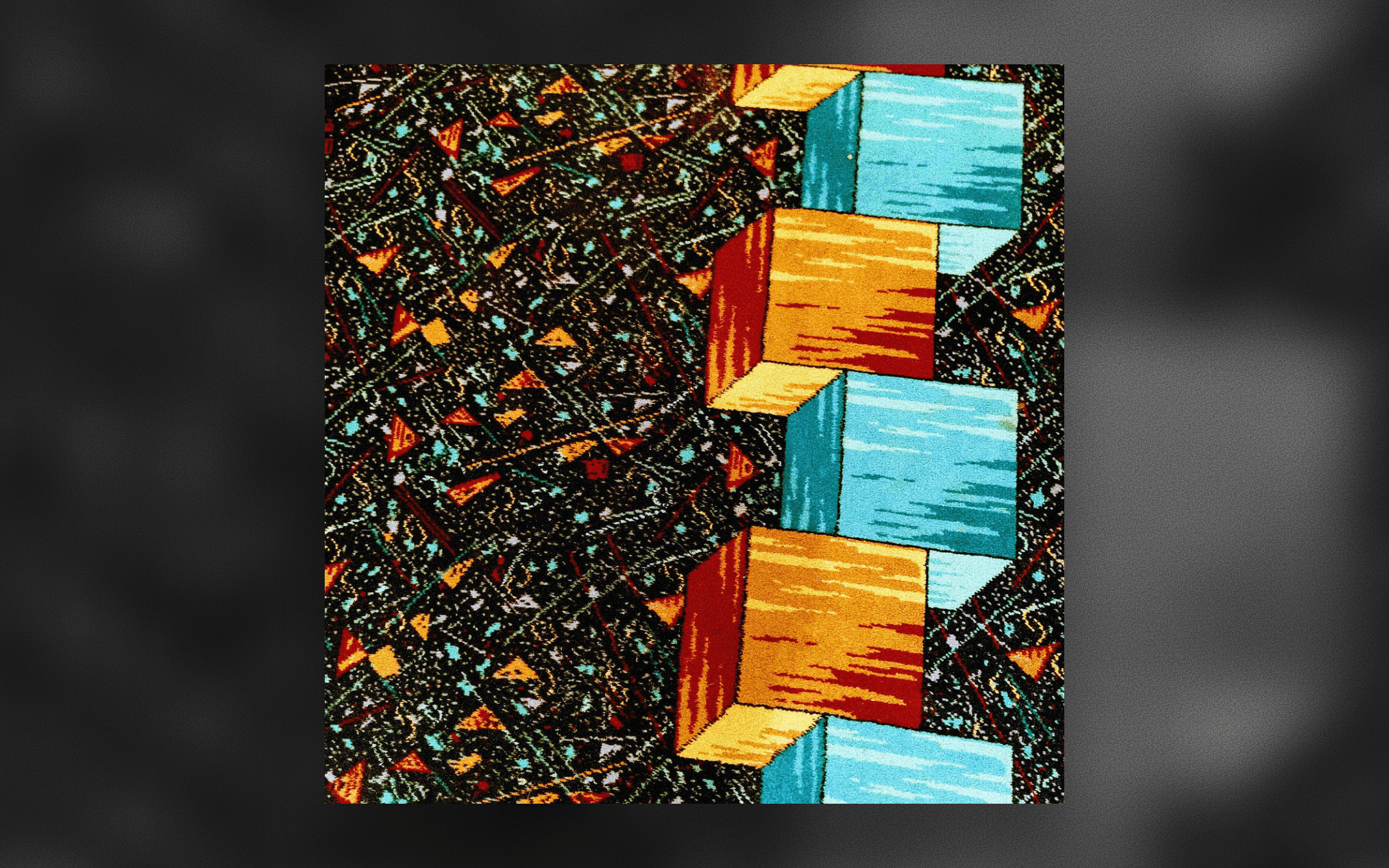
To conclude, quoting Simon, the cover motif also follows this idea:
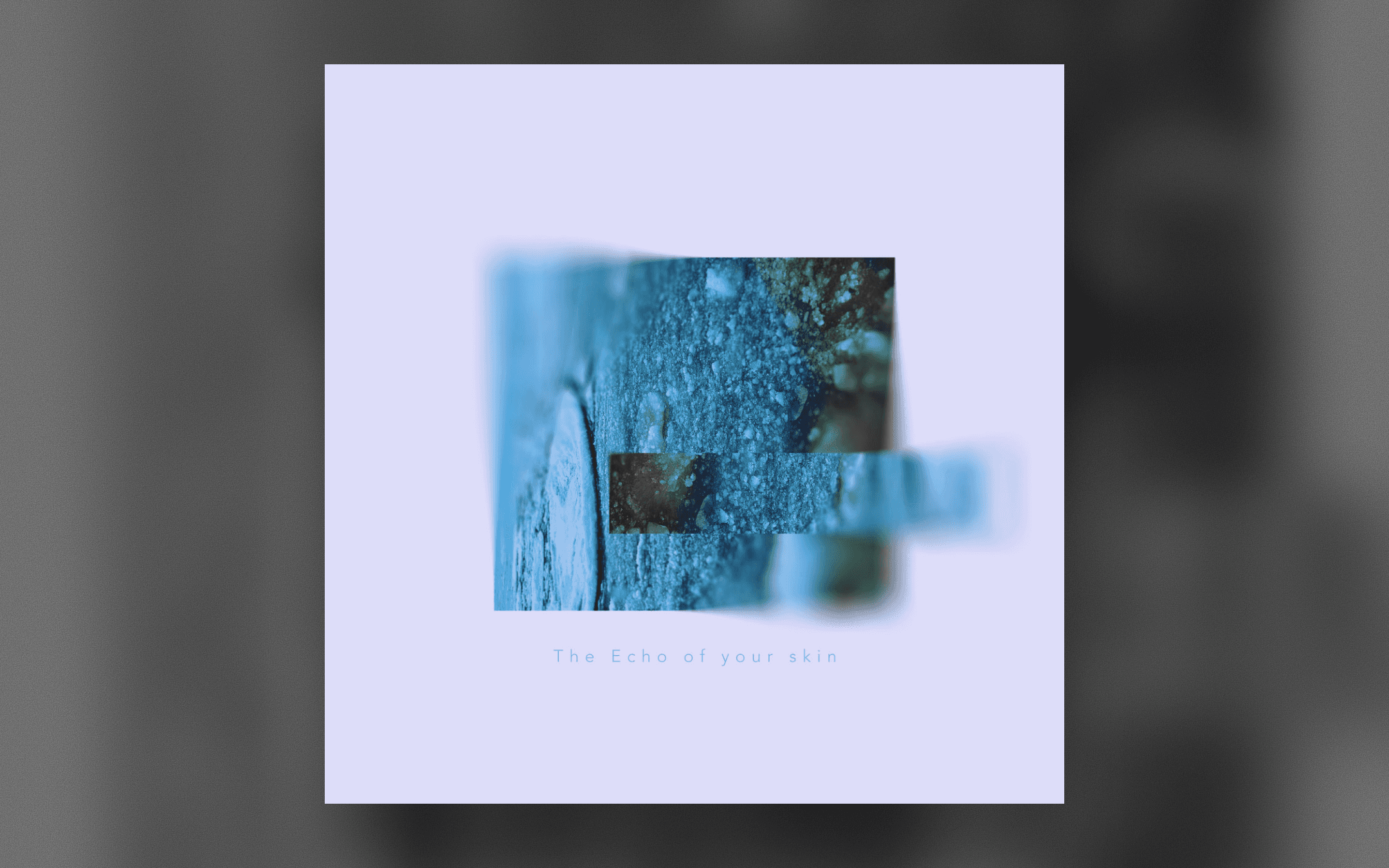
[...] the cover is actually a photograph of a carpet from a cheap roadside hotel! I'm fascinated by the corporate art and deco in these sorts of places, and this carpet was something else! Of course, this rather lends itself to the idea of thresholds, change and places that are neither here nor there. I find these places kind of liberating. It reminds me, also, of those old 'magic eye' images that were so big in the 90s. Perhaps if someone was to stare at it long enough it might reveal something hidden! I also love the idea of taking something mass produced, cheap, gross even and it being reborn as something else. As an abstract image it's fascinating, with its own hermetic narrative - perhaps suggestive of the molecular, or quantum. The mysteries of life all from a cheap carpet!
Mentioned Artists

Collected Works
Join our newsletter for upcoming sessions and releases, curated listening lists, and subscriber-exclusive recommendations.