Deaf Anthropologist & Jerry Lim on tape, trust, and making music without seeing each other
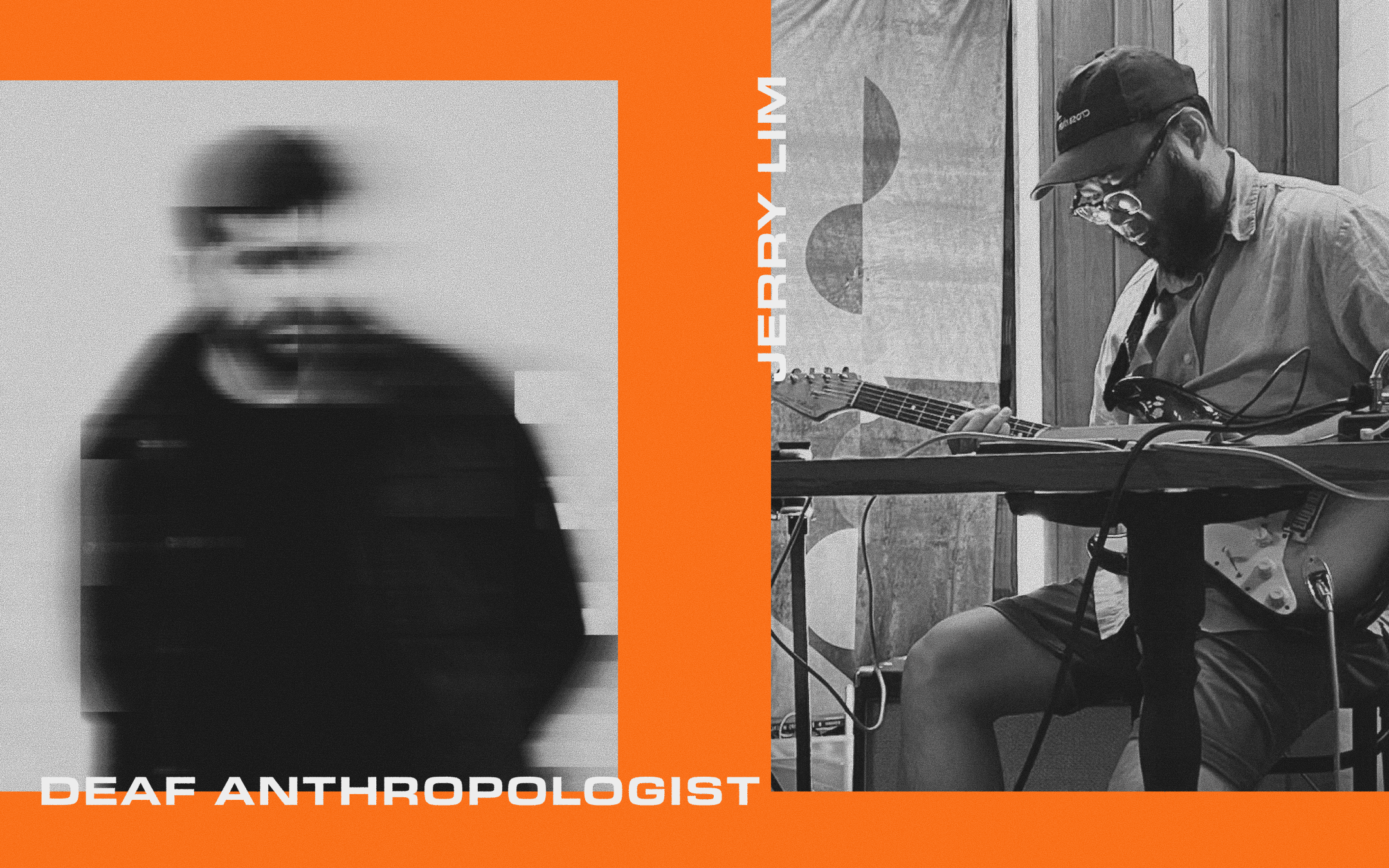
For this session of Exposure Therapy, we brought together two artists whose practices meet at the intersection of texture, intuition, and the limits of perception.
Deaf Anthropologist is the sound and research practice of Hamburg-based artist Gaetano Rago, who approaches listening through anthropology and his experience with profound sensorineural hearing loss. Working with modified tape machines, looping systems, and custom Max patches, he explores how sound transforms and distorts as it passes through machines, memory, and the brain.
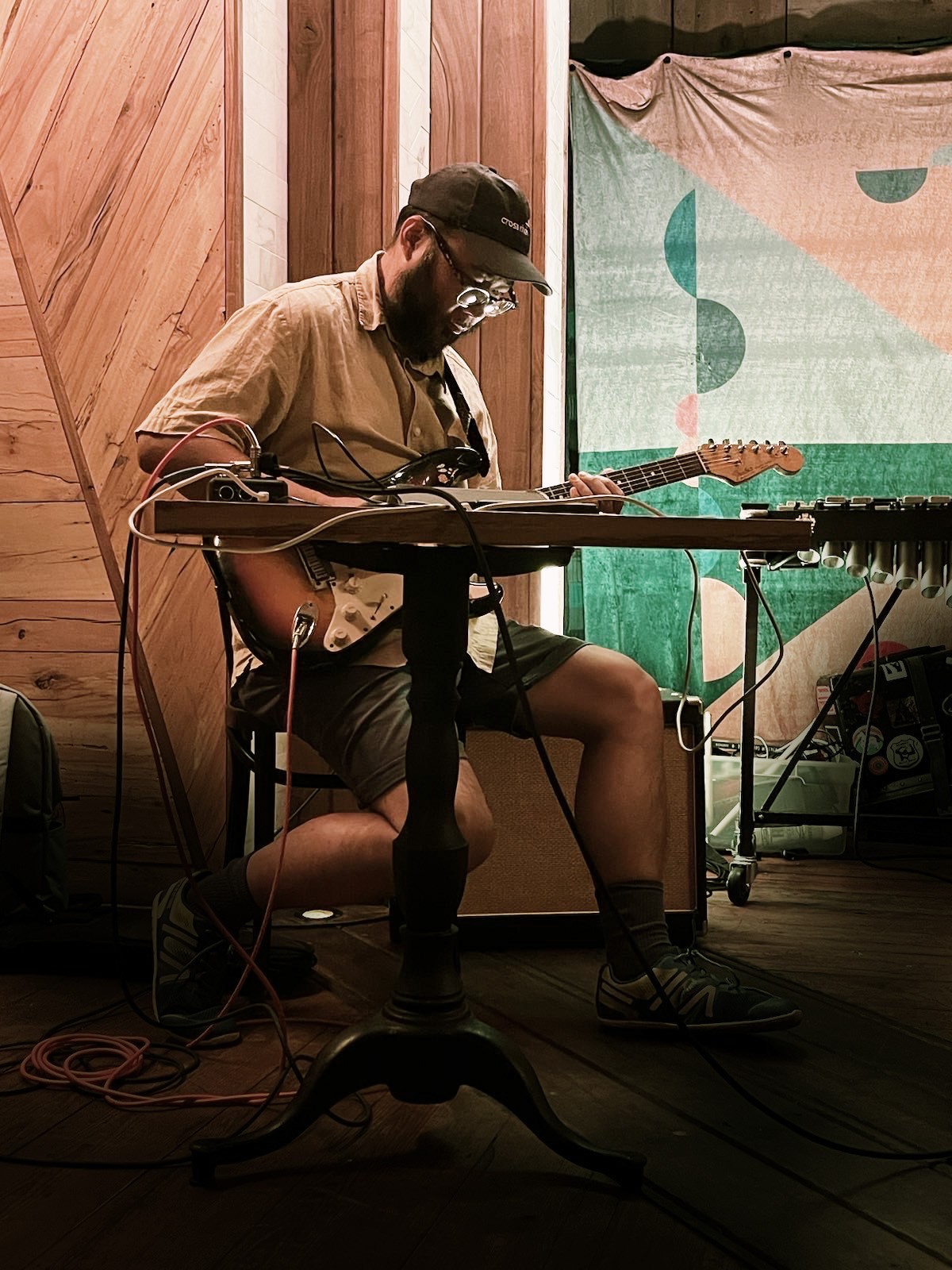
Jerry Lim, based in Brooklyn, is a multi-instrumentalist and visual artist working with guitar, kayagum, hand percussion, and a rotating collection of self-built microtonal guitars. His improvisational work prizes responsiveness and spontaneity, anchored by a strong sense of touch and instinct.
They performed together live on Exposure Therapy in mid-July 2025, meeting only weeks beforehand and navigating remote rehearsals across time zones. After the performance, we spoke with them about delicacy, chaos, trust, and what it meant to create a shared world without ever sharing a room.
The Interview
Ben: Thank you both. Your performance had this sense of delicacy running through it, even when things became loud. There was always a fragile thread beneath the surface.
Sam: It reminded me of a passage from Leonardo da Vinci’s treatise on painting, where he describes how rain distorts the world. Objects behind it blur or become more defined depending on the light. Listening to your set felt similar. Things were constantly shifting in and out of focus.
Jerry: Thank you. My setup was a mix of electric and acoustic guitars, the kayagum, a bowed gong, and some small Korean hand drums. Everything ran into Ableton, mostly as a mixer, with light processing. I used one main mic and a couple contact mics. The challenge was figuring out how much space I should create and how dry the sound should be, because I wanted to sit well next to Gaetano’s textures. That part is always tricky. You are basically thinking about the environment you are creating in real time.
Ben: Your acoustic sounds paired beautifully with the tape work. They occupied different spaces but blended naturally.
Ben: Gaetano, can you walk us through your setup?
Gaetano: Technically speaking, it is three devices. A MacBook, an audio interface, and a modified tape recorder called the Tapesnake. It is a speed-modified tape deck with adjustable wobble, drones, and a strong low end. It changed my workflow in a very positive way.
Most of what moves through my system are two cassette loops with recordings of bowed guitar strings I made in the past, along with background noises I recorded here in Hamburg. I ran those loops through a bass amp, dubbed them again, and then processed everything through the Tape Snake, digital samplers, and Max for Live patches I built.
My focus is on layering, but I also like creating dynamic breakdowns where things become loud or unstable. The Tape Snake feels sensitive, almost like its own instrument. It sits between order and manageable chaos. You surrender some control, but that tension is very important to me. Every change you make flows directly into the recording, so you have to engage with it like a living thing.
Sam: You can hear that. Even the distortions feel physical, as if the machine itself is inside the sound. How did you approach preparing a set with Jerry?
Gaetano: Much of the planning happened early, before Jerry and I even talked. I prefer limiting myself to a few elements. The technical environment was already set, and I did not want more equipment. I wanted to get more out of what was already in front of me.
Most of what you hear from me is based on a small selection of materials that I transform in many ways. Everything in my work revolves around the relationship between the original sound and its transformations. I push manipulation until it distorts into noise. These processes tell stories. They leave traces. I see myself as a researcher following those traces and trying to understand them.
I also listened to what Jerry shared online to get a feeling for who I might be collaborating with. I tried to imagine what our sound could become. But once we rehearsed, everything happened in my intuition. In rehearsal and performance, I am not in my head anymore. I improvise as much as possible. My only expectation for myself is that I can identify with what I am doing and stand behind it.
Ben: Jerry, how did that process land for you? What was it like stepping into this pairing?
Jerry: For me it was like any live performance. I respond to what is happening in the moment. I did not listen to too much of his past work before we rehearsed because I wanted to hear it fresh. The relationship is what matters. Developing that took time. And honestly, the technology was the hardest part. For someone who feels pretty tech savvy, I found it surprisingly challenging.
We would finish a rehearsal and I would be sweating like I had just left a sauna. I was surrounded by way too many instruments and options. I approached it the opposite way from Gaetano. He limited his setup, and I brought everything. I probably used a quarter of what I had out.
Sam: What did you take away from the collaboration? Anything that pushed you into new territory?
Jerry: I did not feel any friction. Gaetano is so articulate about his process, and that was refreshing. He shared a lot of material offline. We slowly built trust through those conversations and rehearsals. We are working on a project of his after this, so clearly something clicked. I felt that our duo was always given attention and care. That was important.
Gaetano: For me, two things stood out. First, Jerry’s understanding of sound and his versatility. You know you are working with a professional when you can jump right in without talking about it. Press record, start, and see what happens. That approach picked me up immediately. It was refreshing because I think a lot before acting.
The second thing is connected to my hearing impairment. In rehearsals we turned off video to save bandwidth, so I could not see anything Jerry was doing. I rely heavily on visual cues to understand my surroundings. They tell me if something is wrong with my hearing aids, if background noise changes, if someone is speaking quietly or loudly, or if the room is too reverberant. Without any visual information, I had no idea what instrument he was using or when he would start.
It brought up a lot of insecurities. But it also gave me an opportunity to let go and deepen my listening. Listening first, then developing everything by ear, trusting intuition. It felt like making music with a blindfold on. That experience gave me more confidence in my own ability, and I am very grateful that it worked as well as it did.
Ben: Hearing that adds a whole new dimension to the performance. Thank you both for sharing your process and for such a beautiful set.

Mentioned Residencies
Mentioned Albums
Collected Works
Join our newsletter for upcoming sessions and releases, curated listening lists, and subscriber-exclusive recommendations.