The Echo of your skin by Atheer Soot
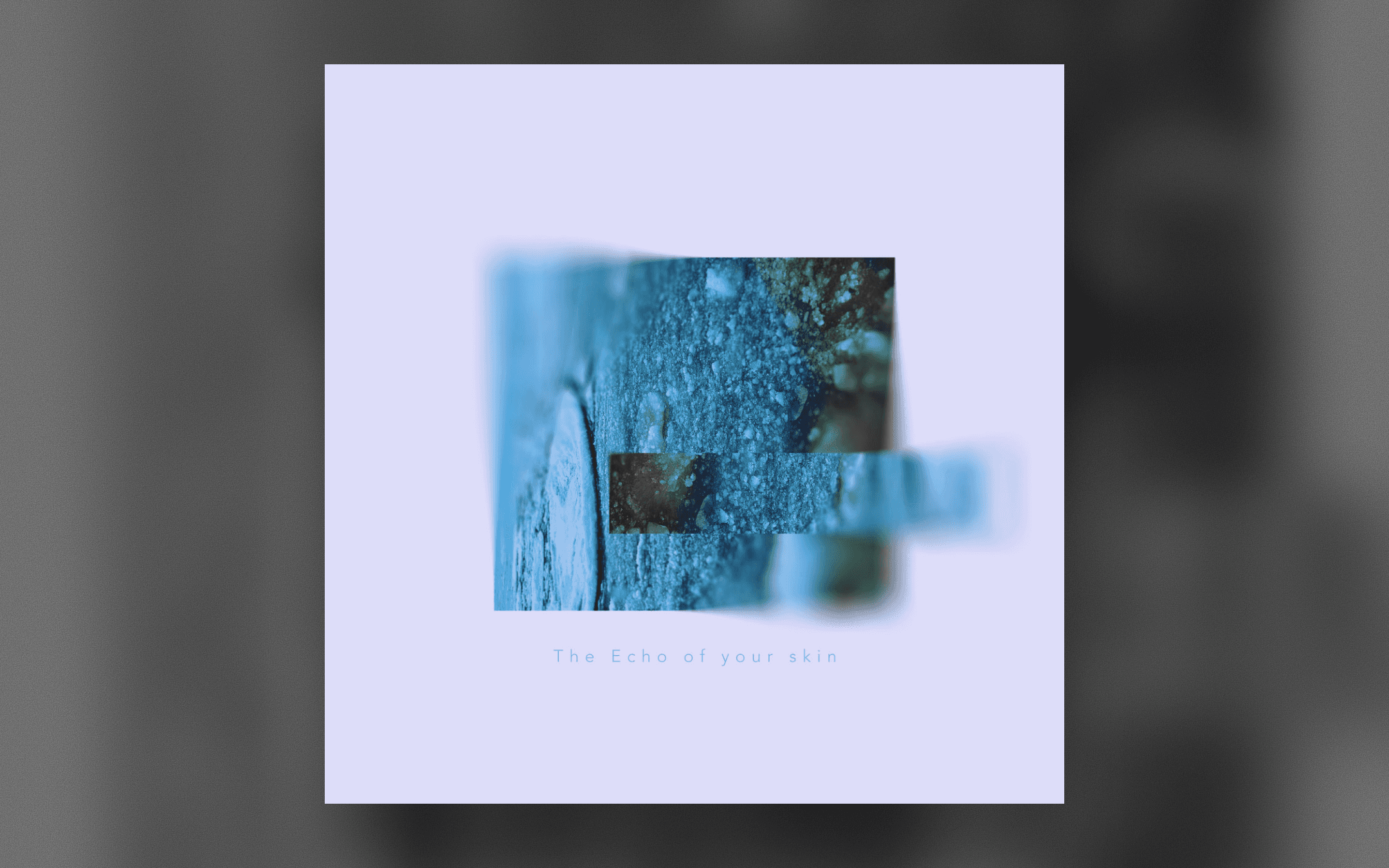
Creating space for what cannot be put into words: queer desire, grief, and the relationship between body and memory.
Can we conceive of skin as a resonating body? What kind of sonic reality emerges when it not only receives, but also reflects sound, delayed, as a repetition? Atheer Soot is the project of Helsinki-based Moe Mustafa, a Palestinian-Jordanian visual artist, playwright, and theater director. In The Echo of your skin, he uses this ubiquitous membrane as a metaphor, a starting point for a composition that is as fragile as it is profound.
I had the opportunity to speak with Moe about the creation of his album and its imagery. Moe explained that the album represents a conversation with a body that never arrives, never responds, and therefore continues to echo in an open space. This fundamental emotional state of a body that inhabits places without ever fully arriving, leaving behind a long trail of reverberation, unfolds its intimate effect across the album’s eleven tracks.
Anyone familiar with Moe’s work, as founder of artist-led interdisciplinary MoMuLab and as Atheer Soot—Arabic for “a sound that echoes in the void”—can be certain that his album The Echo of your skin will be a multisensory experience. Like all his work, The Echo of your skin is a composition that views sound, text, performance, and design not as separate disciplines, but as different ways of collectively shaping an atmosphere. This coherence characterizes the entire album.
The Echo of your skin demonstrates three distinct movements, each building upon the previous with increasingly clear musical explorations of meaning and lived experience.
The first movement gently immerses the listener in a granular universe. The individual sound elements introduced initially feel their way through their surroundings in search of their place. With great sensitivity, an element is introduced very early on that will remain central throughout the entire composition: granular processing.
As for my setup, it was quite simple. I worked with a DAW, VSTs, and granular hardware, connected to my favorite pedal, the Microcosm by Hologram Electronics. Granular processing was important to me because it allows sound to behave like memory, fragmented, stretched, overlapping, and constantly shifting in time.
Beyond the first three tracks, the multisensory effect at play becomes increasingly clear: the sounds in the granular universe of The Echo of your skin begin to coalesce, condense, and meld into an organic whole. The fact that, for example, the sonic texture of water is used as a recurring sample makes perfect sense on many levels. On a sensory level, because the associated feeling of drifting and sinking is authentically experienced. And on a conceptual level, one might be reminded of the philosophical ideas of the ancient Greek philosopher Thales of Miletus (7th–6th century BCE), for whom water was the origin of all being, from which everything arises and to which everything returns. And here, as you listen, you literally feel the doubt: What if there is no return?
In track 4, the granular universe condenses into energetically floating drone passages, which are transformed into a solemn gravity for the first time in Track 5. Here we get a sense of what happens when the return to an original state fails.
…the body becomes fully immersed in memory, the echo is no longer something observed from a distance, but something the body sinks into. At this point, the body begins to levitate, moving without control or tension. It enters a state of euphoria. Especially in Track 5, the body shifts from echo into sensation, into skin. It begins to remember touch, embrace, breath, and warmth, but when memory reaches that depth, it also opens a void. It invites sadness. This is what leads into the second movement of the album. I often touch on queerness and bodies, male bodies in particular, in my ambient compositions. If I put it simply, it is about a longing for love. I’m also aware that there is not a common connection made between queer desire and ambient music. But ambient music is about atmosphere, texture, and mood; it lingers, surrounds, and touches. As Tonino Griffero writes, "atmosphere is not something inside or outside us, but something we enter, something that brushes against the skin of bodies.
In the album’s second movement, from tracks 6 to 9, the music enters a new, intense state of aggregation. Loops and echoes increasingly shape the soundscape; forms repeat themselves as if frozen in a motion that cannot resolve. The voice that runs through the album (in tracks 1, 6 and 10) is always Mustafa’s own. A decision he describes with unease and conviction: It is the most intimate thing one can use. All the vocal samples are interconnected; they form a continuous conversation drifting through space but without a listener.
Once memory reaches a sensory level, the body and mind begin to move in repetition; as if stuck, or frozen in time. This is why the sounds in this movement become more loop-based, more insistent. Things repeat, echo, and intensify. It feels like a completed stage, where forms become heavier and more grounded, yet remain trapped in motion.
Track 10 ultimately serves as the true final movement, as we, the listeners, are drawn out of the underlying structure of repetition. The body returns to a state of equilibrium, but with new questions: What comes next? What remains?
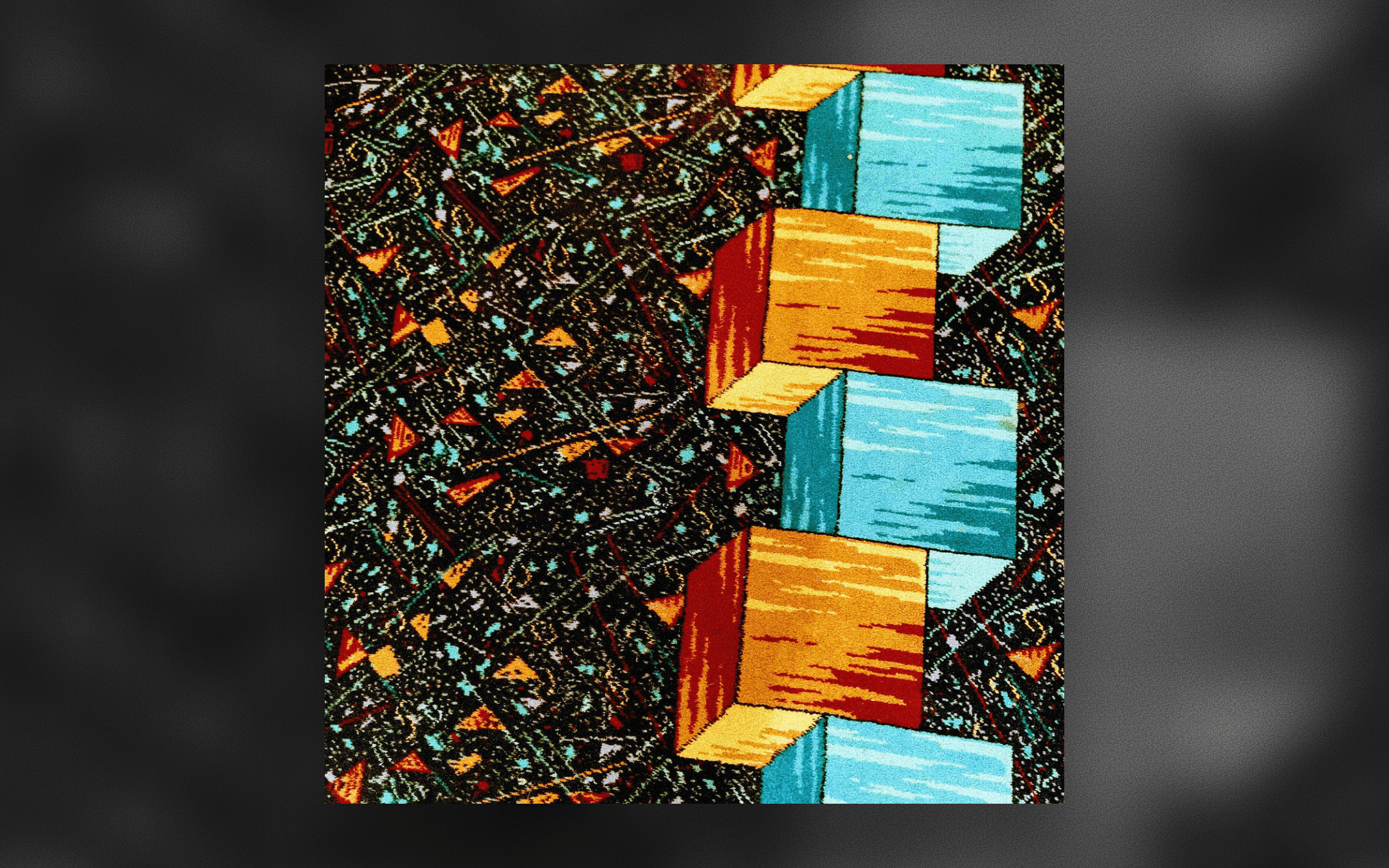
Track 11 stands apart; it is available exclusively on Bandcamp, and anyone who checks their Bandcamp page while listening will notice that it features its own cover art. Unlike the other tracks, an emotional piano dominates the piece here, finding no direct counterpart in the texture of the previous compositions.
After finishing the album, I was sitting on my green couch, and the idea of being stuck in time stayed with me. If you listen carefully, track 11 is actually based on track 7. What happened is that I returned to my studio with this feeling of being frozen, of not being able to move forward. The question from track 10 (what now?) begins to receive an answer: the echo will always remain. No matter how far the body goes, it never fully disappears.
I took track 7 and processed it through my granular device (GR-1 by Tasty Chips), breaking it into very small grains, layering and repeating them. Then I added a few piano notes and chords. This created a sense of suspension, where the essence of time remains still, yet the ontology of time moves forward.
Originally, I intended this piece to be a separate single or B-side, but it ended up merging with the album on Bandcamp. Now I’m developing this idea further into a series of pieces under the title Frozen in Time.
The absent body, the unanswered conversation, the memory that refuses to fade—in Atheer Soot’s work, these elements are not merely illustrated but made structurally tangible. At a time when ambient music is, unfortunately, all too often misleadingly trivialized as background relaxation music for the mainstream, this album reminds us of what the genre is capable of: creating space for what cannot be put into words: queer desire, grief, the relationship between body and memory. That makes The Echo of your skin not an easy album for me, but one of the most honest.
Mentioned Artists

Collected Works
Join our newsletter for upcoming sessions and releases, curated listening lists, and subscriber-exclusive recommendations.