The Pearl of Stillness
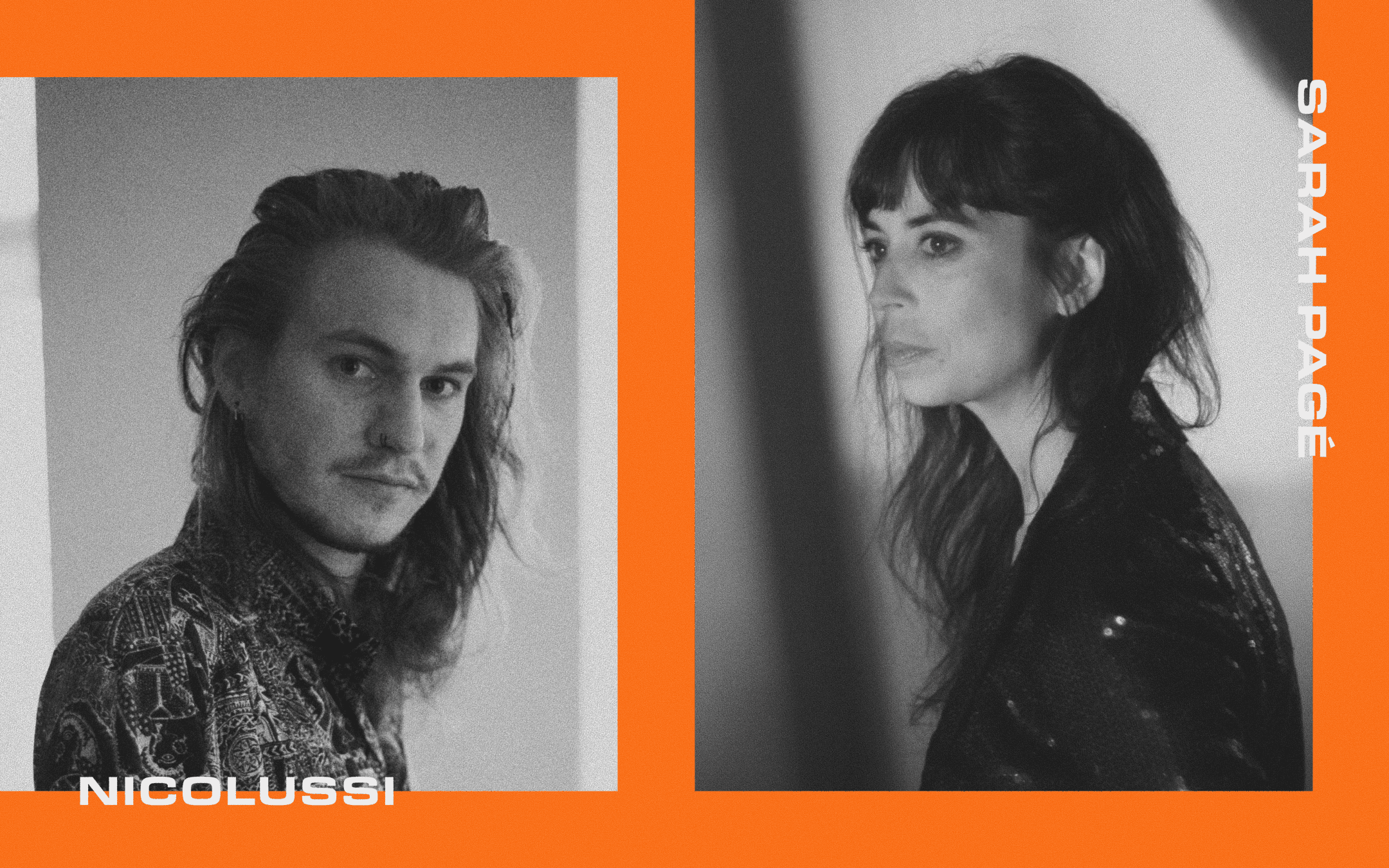
Sandro and Sarah discuss improvisation, musical backgrounds, local scenes, and the intricacy of listening beyond the constraints of sight.
On February 21, 2026, following Sandro and Sarah’s live performance for Exposure Therapy, Ben and I sat down with the pair for a candid, casual conversation. We heard their perspectives, experiences, and personal backgrounds, and were given a peek inside their minds as they negotiated meeting each other virtually, overcoming technical hurdles, and finally working to understand each other’s improvisational language in order to craft a unique, improvised, live performance. The conversation turned out to be informative, surprising, heart-warming, and ultimately, quite rewarding.
Ben Domanico-Huh
That was Sandro Nicolussi and Sarah Pagé live on Exposure Therapy.
Samuel N. Ortiz
Wow. I have the feeling you get leaving a theater after being immersed in a hypnotic film for a few hours, then suddenly being released back into the world.
Ben
I feel like I'm getting hit with the lobby lights.
Samuel
I had quite a few distinct visual references occurring as I was listening to this piece. It felt like a non-narrative journey through worlds beyond language. It reminded me of the abstract visual work of Stan Brakhage, and his idea of “seeing without seeing”, almost like primal perception. At times I thought of The Revenant soundtrack, and occasionally gagaku, ancient Japanese court music. That led me to Tim Hecker’s Konoyo and Anoyo, this constant undulation between tension and release, clarity and obscuring. Overall, it felt very visual and intensely evocative, like a pearl emerging from an ocean of cacophony.
Ben
“Seeing without seeing” really stands out to me. Not in a visual sense, but in a tactile one. I felt the music physically. Sarah, you’re playing harp, which is inherently tactile, but even Sandro’s electronics felt like something I could touch. I could almost put my hand on the speakers and feel the hum. More than any other session, I felt like I was listening with my sense of touch.
Samuel
Beautiful. Raw electricity. Let’s bring in Sarah and Sandro. That was a great performance.
Ben
The level of skill and experience you both bring, and how you work with your instruments, really came through. I’m lucky that I can watch you perform, and it was striking how fluidly you incorporate such a wide range of sounds while staying deeply in tune with each other. It felt like watching a masterclass in improvisation from two very different types of practices. Really a delight to watch.
Samuel
Absolutely agree.
Ben
Sarah, I’d love to start broadly. How did you find your way to the harp? What drew you to it, and how did the koto enter your practice?
Sarah Pagé
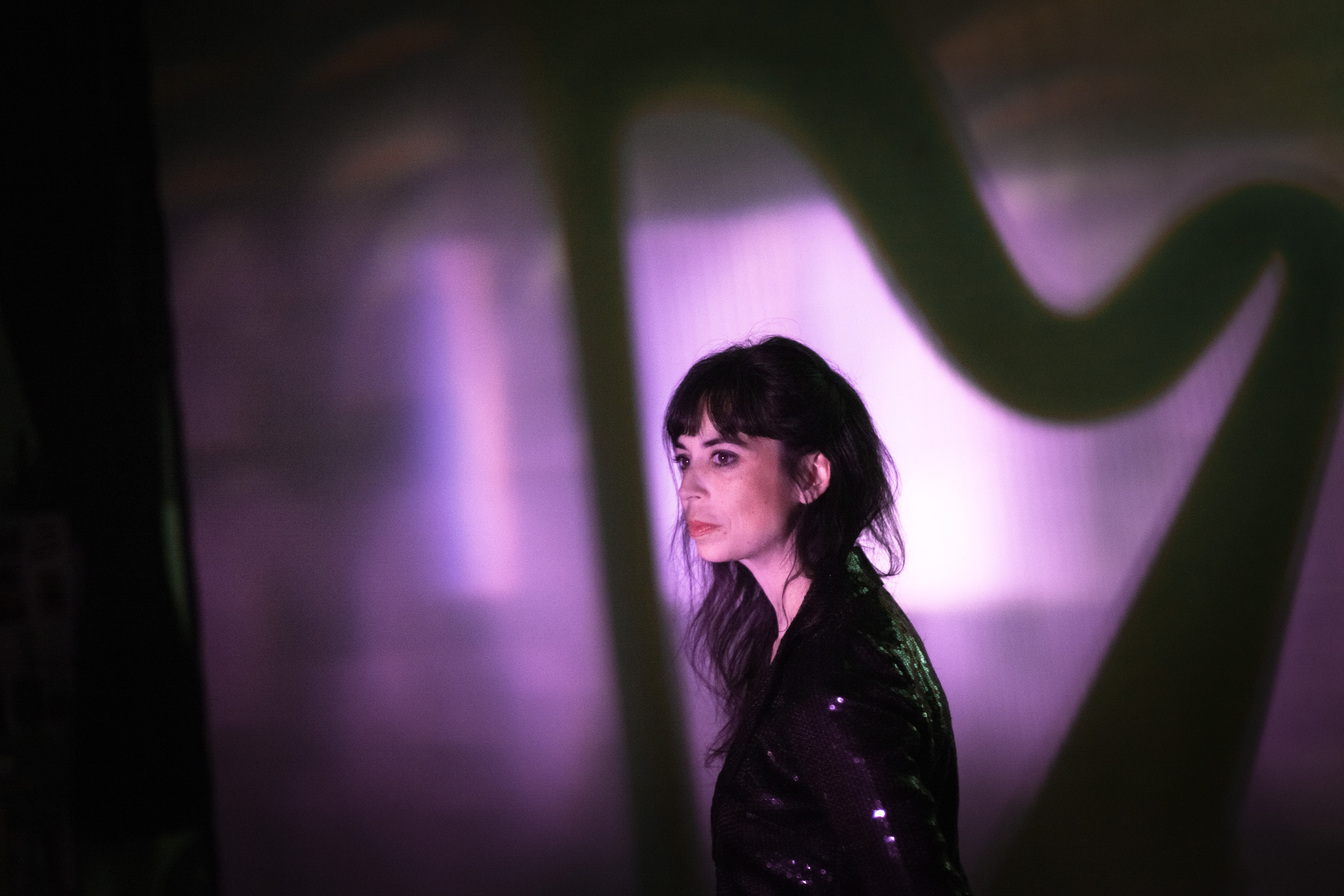
I always knew I wanted to play the harp. When I was a child, I was in love with Harpo Marx, and still am. He’s my all-time idol. I don’t know if you’ve seen the Marx Brothers films, but they’re these old vaudeville comedies, and I thought they were so funny. Chico Marx had this incredible, almost clownish way of playing piano, which I loved as a kid since I was taking piano lessons.
But what stayed with me were these moments of stillness. Harpo, the silliest person in the world, would suddenly sit down and play the harp. There would be chaos, and then suddenly this quiet, focused moment. That contrast meant everything to me. The harp became a symbol of stillness within chaos.
I couldn’t find one when I was young. My first degree was actually in classical guitar. Then one day I realized I was an adult and didn’t need to ask permission anymore. I found a teacher, showed up in full goth mode with piercings, and told her I wanted to play harp professionally and get into McGill the next year. I’d never even seen a harp before. She just said, “Yeah, that’ll be fine.” If she had said anything else, who knows what would have happened. Instead, I practiced about ten hours a day for a year.
Samuel
That leads into something I was wondering about. With your classical training, are there specific string players or traditions that informed your work?
Sarah
I still adore classical music, even though I haven’t practiced it in a long time. At McGill, I was surrounded by improvisers who were always kicking me out of the practice rooms. I started playing with them, and it felt alive.
Playing in student orchestras was exciting, but when I started working professionally, the atmosphere felt heavy. Meanwhile, my jazz friends were inviting me to jam, and there was so much energy and creativity there. I’m from Montréal from a specific time period, so I don’t need to name names, but I was pretty fortunate to play along with the people that asked me to join them. A lot of my inspiration has come from my community. They keep pushing me.
Samuel
That local scene must have been really important in shaping your development as an artist.
Sarah
Completely. The first people who invited me to play were Patrick Watson and his band. Through him I met Lhasa de Sela, who became my best friend. We’d just sit in her living room and write songs. Having access to all of these people and all their different perspectives was incredible.
Montréal is special. You can move between so many musical worlds. That’s also how the koto entered my life, through meeting Japanese musicians. I’ve studied sarangi, traveled to Japan and India. You can always find someone in Montreal who knows just enough to get you started on something new. It’s really quite a fortunate experience to have so many musicians around.
Samuel
Do you have a dream collaboration?
Sarah
I have to be honest, it always comes back to something local because I’m so inspired by what’s around me. Lately I’ve been obsessed with the hurdy-gurdy. Matthias Loibner in particular. I’m working on an arrangement of my album Voda for an acoustic ensemble, and I found Ben Grossman, who is Canada’s answer to him. He’s an incredible experimental hurdy-gurdy player; he’s a whole universe.
He made a record designed to be played on two CD players simultaneously, where the listener controls the experience. That kind of thinking fascinates me. So right now, my dream collaborator is a hurdy-gurdy player who approaches the instrument freely and uniquely.
Ben
Sandro, turning to you. Your work engages deeply with history through obsolete media and archival material, rooted in the electronic signal itself. What draws you to that?
Sandro Nicolussi
Wow, huge question! Honestly, I think it started with a kind of voyeurism, where I was listening to audio that was not meant for my ears, let alone the public’s ears through obsolete media like abandoned tapes and reels. I got into electronics by watching people use dictaphones and tape players, and sampling their own music by slowing audio down. When I bought one, it was broken, but it came with old microcassettes that still had recordings on them. When I listened to the cassettes included with the broken dictaphone—people talking, negotiating business deals and issues, this was content that was not meant for me to hear.
At first it was just intriguing. Then I started collecting more tapes, archiving them, sampling them, thinking about how an archive works. Over time, I became more aware of the ethical questions. There’s a lot of violence embedded in archiving practices.
Now it’s a core part of my work. Corridors of interpretation are really wide. I hear voices of people I don’t know, maybe people who are no longer alive. I don’t know their stories, but I hear them. It’s something I approach more carefully now, but the fascination is still there.
Ben
I can understand the excitement, and the potential danger of it being a voyeuristic act. Help bridge me between how this became a musical practice, rather than something more archival or documentary?
Sandro
I just played with it. Electronic textures are interesting, but in the end we respond most strongly to human voices. I was still figuring out how to use a human voice other than my own voice, so I turned to these recordings. They became an anchor within abstract textures. These strangers helped me make the music feel human. Human music.
Samuel
Your work reminds me of artists like Robin Rimbaud (Scanner) or Jan Jelinek, where sound carries narrative weight, and the human element is often embedded in their recordings and composition. I also appreciate how they’re so adept at building out a story through their music. I wonder, in your case, do you approach your work through story, texture, or some different sort of methodology?
Sandro
It’s a mix. I don’t have a clear structure. Sometimes that’s frustrating, because it’s not efficient, but I’m not a company, and my primary goal is not to be efficient. I experiment with whatever tools I have, analog equipment or digital granulators and other tools, and eventually something emerges that functions as a starting point.
Recently I’ve also been influenced by colleagues, such as Angélica Castelló, who treat live improvisation and electroacoustic music more like DJing, sampling each other’s work. I traded a cassette with her once, and she added it to her stack of audio, very clearly explaining her intent to appropriate my music and to intermingle with the source material for her next live performance. There’s no fixed path, and that’s what keeps it exciting.
Ben
Let’s talk about your collaboration. Sarah, what was it like working together?
Sarah
At first we focused on setup, which is essential to the Exposure Therapy experience. Improvising remotely is very different from being in a room together. You lose visual cues and body language.
I was playing bass koto and electronics, so we spent time understanding each other’s sound sources and limitations. In person and on stage, I might look at the other performer, and think “This person is playing a modal instrument. I can explore playing more rhythmically, or I can move in a more harmonic direction.” But when you don’t have any of these visual cues, you have to consider what territory to occupy. We spent time understanding what we can and can’t do, and then practicing over Cleanfeed. There are technical things that are primary, which is a new experience for us, but even technical constraints become musical decisions. You have to intuit when to leave space, when to move on, without visual communication. It takes time to figure out how you want to collaborate.
But once we had done a couple of rehearsals, it became really pleasurable. There were moments where I had that feeling of improvising with another person, being fully in headphones, fully listening, and thinking, “I want to go here. Will he catch me? Will he know how to respond?” And then he would.
There were also moments where I wanted to stop and listen because I liked what Sandro was doing so much. At first, you wonder if that will alarm the other person, but it didn’t. We had talked a lot about giving space and leaving time, and eventually I felt confident enough to sit back and listen.
Ben
I’ve found there’s also a tendency to just keep going in this format, which can push you into new territory.
Sarah
Exactly. That’s the fun of it.
Ben
Sandro, how was it for you?
Sandro
I realized I often get so absorbed in sound that I stop looking at other people anyway. So this format actually felt natural. It removed that expectation.
There were also moments when I wasn’t sure what was coming from me and what was coming from Sarah. I’d hear something and think, “I’m going to emphasize this,” and then I couldn’t, because it wasn’t me. That was a beautiful experience.
At the same time, I felt some pressure. I mentioned Godspeed You! Black Emperor as an influence, and Sarah said she’d worked with them. As a self-taught artist, that can trigger imposter syndrome. But the environment felt safe. Your communication and preparation, Ben and Sam, made it easier to focus on the music.
Samuel
That’s really amazing, thank you for sharing that. Hearing about your experiences and perspectives after your incredible performance is a reward for us. Ben and I, when we first started doing this, hadn’t played together for a while, we reconnected through music, went through all these hurdles, and the idea to open this up to other people has been really fruitful and meaningful for us. I love what you guys made today, and hearing about your experiences, your background, it’s such a rich experience for everybody, and it’s part of why we do this.
Sandro, I’m curious about your local scene, discovering the value of it in person, how you support it, how it supports you and your involvement there. How does it shape your work?
Sandro
Vienna has a rich DIY scene. It’s small and not pretentious. You can meet people easily, collaborate, and build relationships quickly. I really value that.
I experience people as really supportive, and I try to give back through my tape label, Epileptic Media, releasing local DIY music, working closely with artists without economic pressure. I often prefer trading tapes instead of selling them, as I want to experience new music, and the tape trade gives you a personal relationship to that person and their music. I also run a space for performances and dub cassettes for artists. It’s about supporting each other and staying connected.
Ben
Sarah, how would you describe the Montréal scene today, beyond its history and lore, especially for younger artists? Is there a way the existing community is giving back or fostering entry for younger musicians?
Sarah
It’s changing. Gentrification has made things harder, and many musicians have moved farther out. The economy had a big part to play as to why Montréal became as fascinating a city as it did—it was always a very cheap place, so you’d have artists from all over North America deciding to live in the city. What a musical community really needs is free time, and that’s becoming increasingly difficult to come by, and essentially the biggest challenge. People need day jobs, so there’s less space for experimentation.
But the spirit hasn’t changed. There’s still no real divide between generations. You might see a 20-year-old playing a sampler alongside a legendary jazz musician. It’s open, accessible, and supportive.
If you’re starting out, you just have to keep going to shows and meet people. There’s no gatekeeping. The community is still there, even if the conditions of the economy are making things tougher for younger people.
Samuel
When we first spoke, you mentioned wanting to extend your reach and build something resilient in the face of everything happening economically and culturally right now, and I think that really connects to what we’ve been talking about here today.
We’re really grateful you both joined us. Thank you for your performance and for sharing your experiences. We’re so glad to have met you.

Mentioned Residencies
Mentioned Albums
Collected Works
Join our newsletter for upcoming sessions and releases, curated listening lists, and subscriber-exclusive recommendations.