A Constant Heartbeat
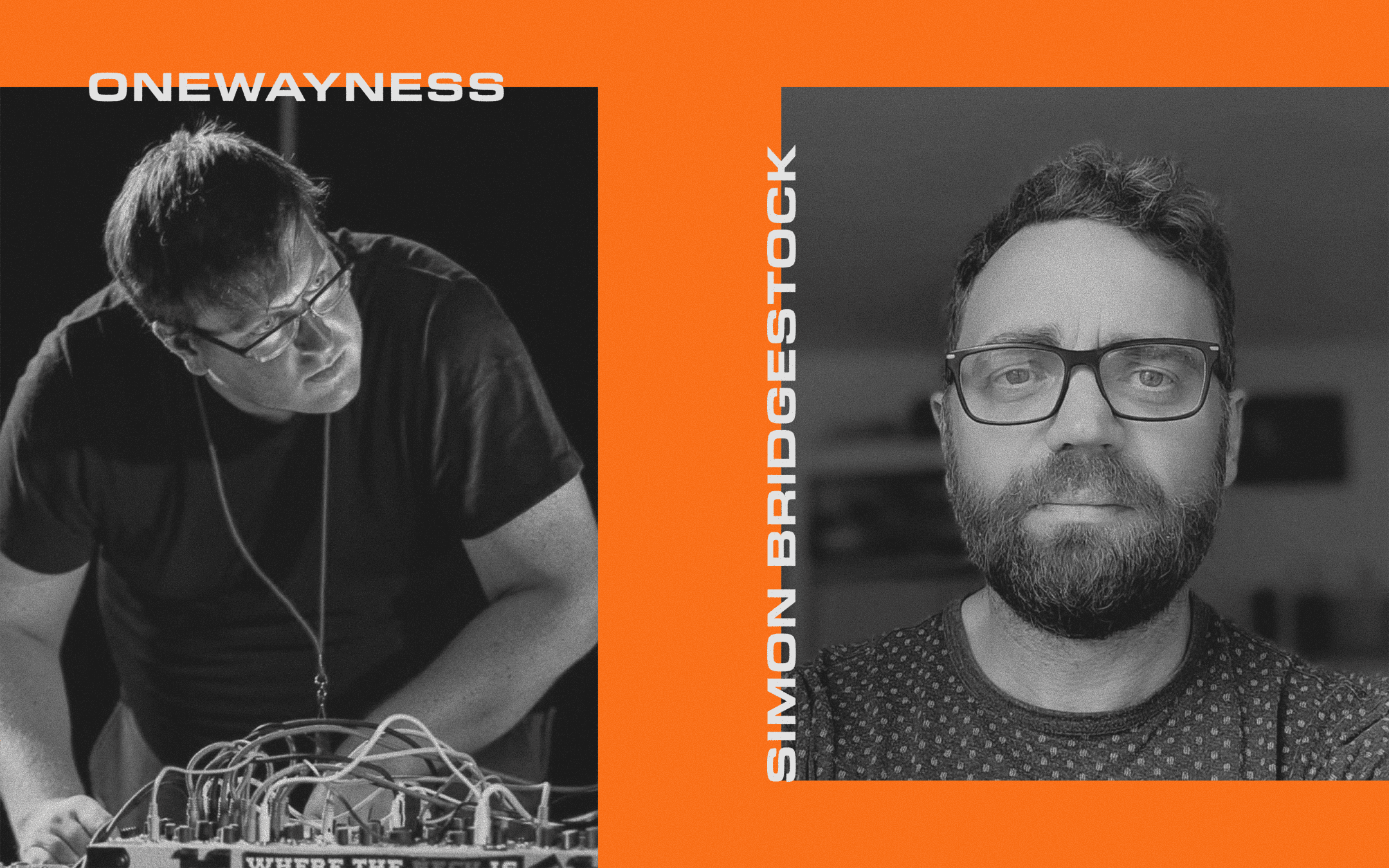
Exploring improvised sonic structure with some guideposts along the way, Adam Holquist and Simon Bridgestock describe their haunted, creative journey.
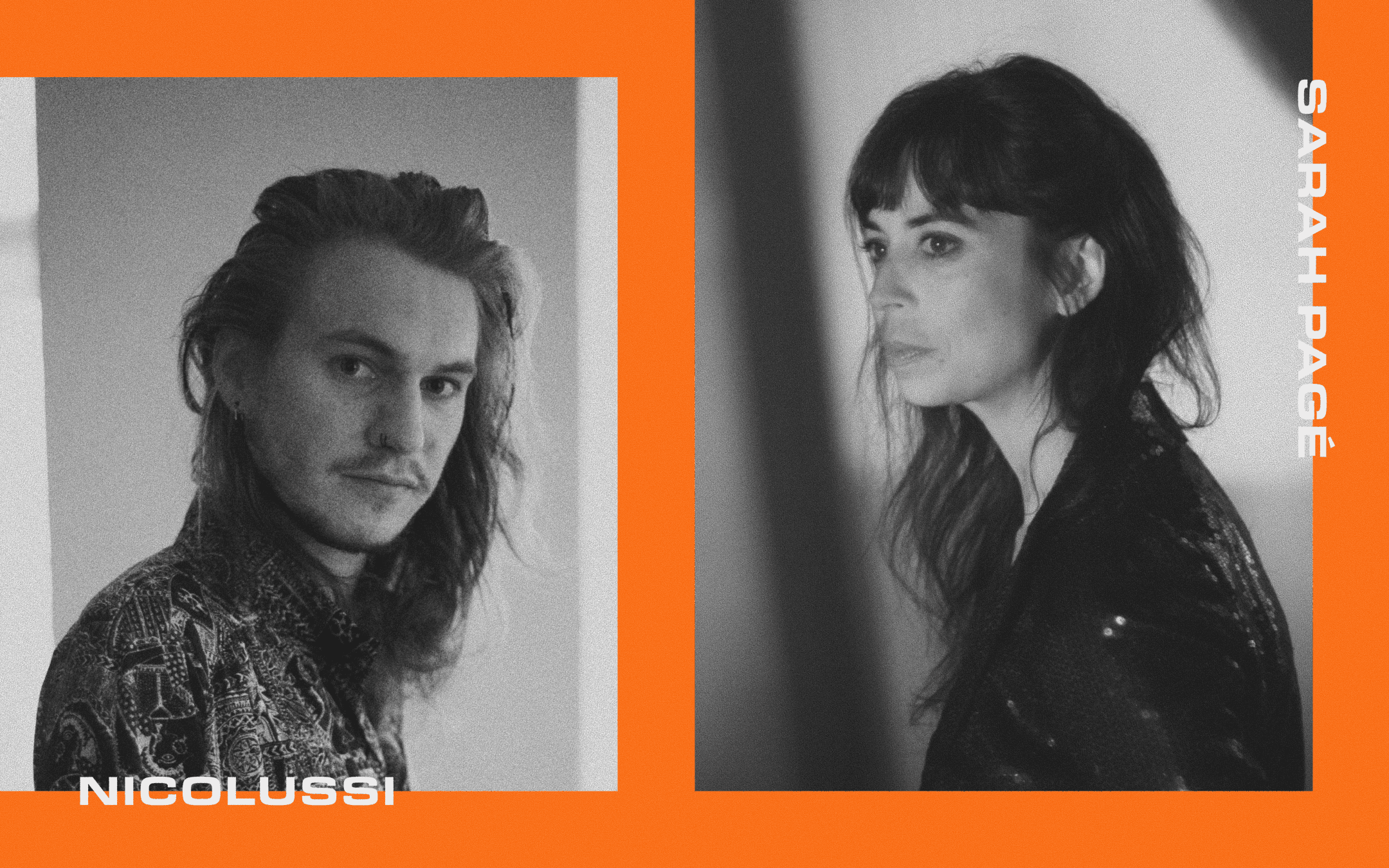
In May 2025, Adam Holquist, who records as onewayness (Erie, PA), and Simon Bridgestock (Canterbury, UK) performed the third live session for Exposure Therapy. The two had met only a few months earlier. This conversation with hosts Ben Domanico-Huh and Samuel N. Ortiz was recorded live, right after their set.
Ben Domanico-Huh
What an incredible and pleasantly surprising performance from onewayness and Simon Bridgestock. At times what you were each playing diverged and felt quite distinct. At other times it converged and felt like it came from a single source. I really appreciated that long, breath-like quality of separating then melding back together.
Samuel N. Ortiz
That’s a good way to put it. I felt a real cohesion in the materials. I had a strong sense of a tactile quality, like antiquated cloth: tattered lace curtains floating in slow motion in the moonlight, or the upholstery of a couch from a previous generation. It had a lived-in quality.
I think it played into the idea of hauntology as well. I was thinking about warped memories. The delicate metallic sounds reminded me of the gate of a haunted mansion swinging in the wind. A whole miscellany of tactile scenes came to mind as I was listening. Thank you both. I really enjoyed it.
Ben
Great performance. We have a few questions for you both.
Adam Holquist
Thank you so much.
Simon Bridgestock
Thank you for having us.
Ben
We’d love to hear more about your setups. Walk us through what you’re each playing and how you’re making music together.
Simon
It’s pretty simple. I’m running Stacks on iOS, which is a loop-based granular looper. You can modulate an insane number of parameters and create some pretty interesting things.
I’ve got a Moog Mother-32 with an extra oscillator for my old-school sounds, plus several virtual instruments running through Logic. I have other bits and pieces, but I pared it down. Through rehearsals I realized I didn’t need to do as much as I would on my own.
Adam
One of the first times we talked, we discussed the hauntology ideas Simon has been exploring, the same thing Sam just mentioned. So I wanted something that would go well with that.
I was using my small Eurorack setup, which has an RF Nomad in it. That’s a shortwave radio receiver, and shortwave signals were the source for everything coming out of the Eurorack. I filtered them, ran them through the Echophon with some gating, and then through Clouds for some textural, percussive, weird stuff.
My new toy is the Koma Elektronik Chromaplane. I backed their Kickstarter a few months ago, and it arrived here in the U.S. a week or two ago. As soon as it showed up, I fell in love with it. It’s such a fun, intuitive, meditative instrument. I find myself sitting in front of it, playing for much longer than I mean to.
On the software side, I had to change laptops recently, so I’ve been reinventing my process and signal flow. I’m picking up Bitwig, which I used as my DAW and as the mixer for all the hardware. I’m a Linux guy, one of the Linux masochists. I was running a soft synth called Vital, and Noises from AudioThing, which was doing some generative, chordal, droning, and I used a drum machine as well.
I was also live looping some guitar, and I had a record playing. A friend gave me a collection of old sound effects records from the ’70s, including one called Ultimate Heartbeat, which says it’s for meditation and lovemaking. That was playing in the background for about the first two-thirds of the set.
Ben
There was a part of the performance that sounded a little like an R&B slow jam, so I can see how that record found its way in.
Hauntology seems like a good place to branch off. I’m curious about your process. There’s a great distance between you, so you had to decide how much to plan, prepare, and score versus leaving room for what happens in the moment. What did that look like, and how did you weave in your influences?
Simon
I think it was different every time. The one constant was the heartbeat. In every rehearsal, that heartbeat was there. We sketched out a basic structure, talked about noise and melody, picked a key, and talked about the ebb and flow.
Adam
From the first time we played together, we found textures we really liked right from the jump. That first time we just said, “Okay, go,” and got into some nice textural things that we decided to keep as a base.
Then we realized a few sections and a little structure would be nice. So the intent was to start in a textural place, move to a melodic place, then a rhythmic place, then back to texture, but noisier. A very loose structure with some guideposts along the way, but still a lot of room to improvise.
Ben
I’d love for you both to reflect on collaborating together, personally, musically, or anything else that comes to mind.
Simon
For me, it’s the first time I’ve done it this way. It makes me realize how visual improvisation normally is, and here there was none of that. It’s pure listening, which is different and really enjoyable. It’s difficult, but it’s just a different way of doing it. It makes you focus in and take your time.
Adam
It rewards slow movement in a lot of ways, gradually introducing elements and moving from thing to thing. We found sounds that worked together pretty easily. I think we came from complementary places to begin with, which certainly helped. We had common reference points and enjoyed making the same kinds of sounds.
But what Simon said is true. You’re sort of doing it blindfolded, which is an interesting way to play with somebody.
Simon
Music is about listening, but this highlights how important the visual element normally is when you play with someone. I can’t give Adam a look that says, “Don’t do that,” or, “Do more of that.” You’ve really got to work out when to take the lead, when to pull back, when to take your time. It’s tricky, but really enjoyable. Very rewarding.
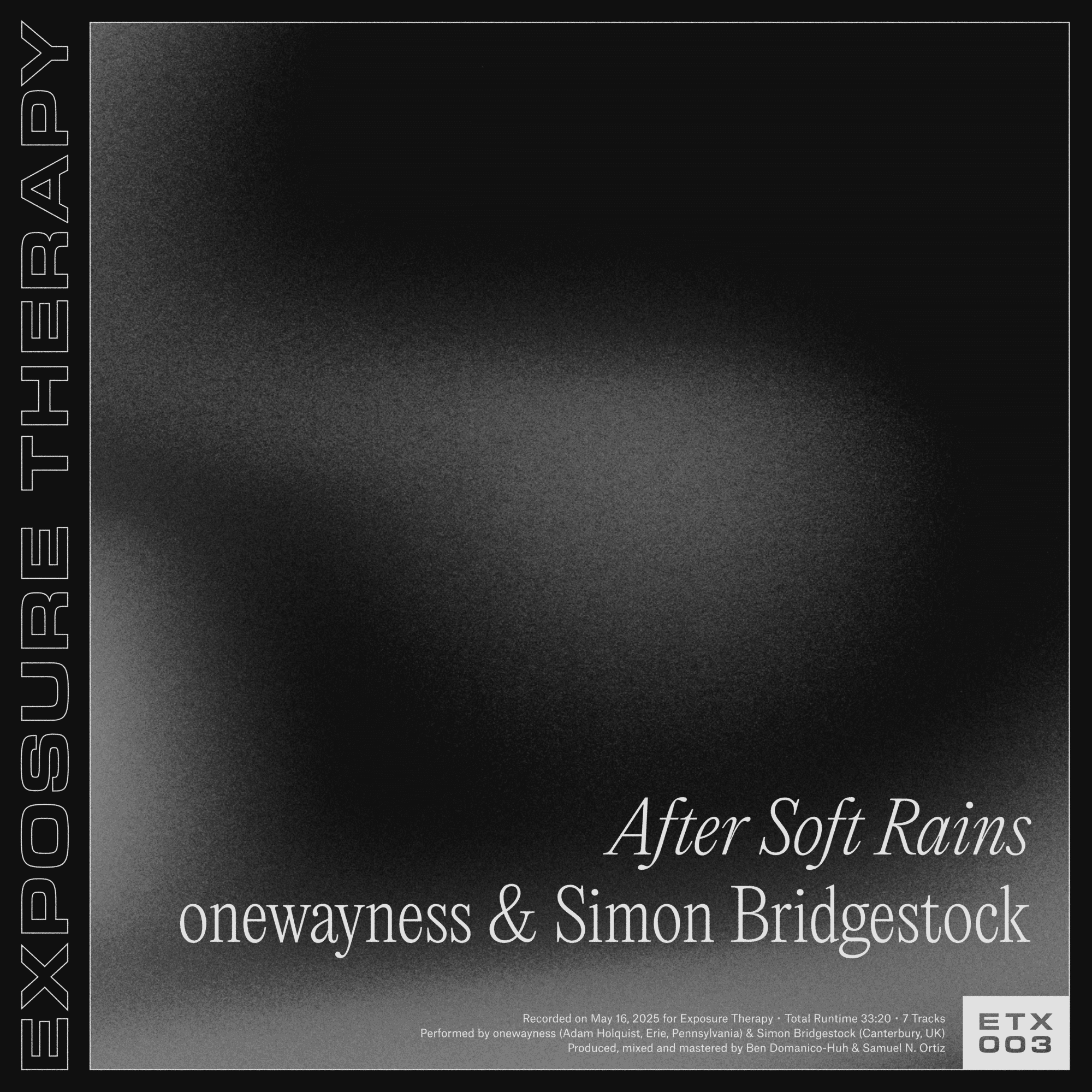
The session has since been released as After Soft Rains (ETX003), available now on limited-edition cassette. Listen and order on Bandcamp.
Mentioned Artists


Mentioned Residencies
Mentioned Albums
Collected Works
Join our newsletter for upcoming sessions and releases, curated listening lists, and subscriber-exclusive recommendations.